Padel confirmed as an official medal sport at the 20th Asian Games Aichi-Nagoya 2026
March 6, 2026
Padel confirmed as an official medal sport at the 20th Asian Games Aichi-Nagoya 2026
News
AINAGOC, the Olympic Council of Asia (OCA), and the International Padel Federation (FIP) are pleased to announce the formal conclusion of the Memorandum of Understanding (MoU) concerning Padel confirmed as an official medal sport at the 20th Asian Games Aichi-Nagoya 2026.
The MoU establishes a clear framework for cooperation and define the respective roles and responsibilities for the successful delivery of the Padel competition at the Games. In accordance with the agreed framework and the decision of the OCA Executive Board, FIP will assume primary responsibility for the planning, preparation, and delivery of the Padel competition.
AINAGOC will work in close cooperation with FIP to support the successful delivery of the Padel competition at the Aichi-Nagoya 2026 Asian Games, providing the support expressly set out in the MoU, while the OCA will oversee the inclusion in line with its governance and regulatory responsibilities.
All three parties reaffirm their shared commitment to delivering a high-quality and successful Padel competition at the Aichi-Nagoya 2026 Asian Games, contributing to the continued growth and development of the sport in Asia.
Further details regarding competition schedules and operational arrangements will be communicated in due course.
<Appendix>
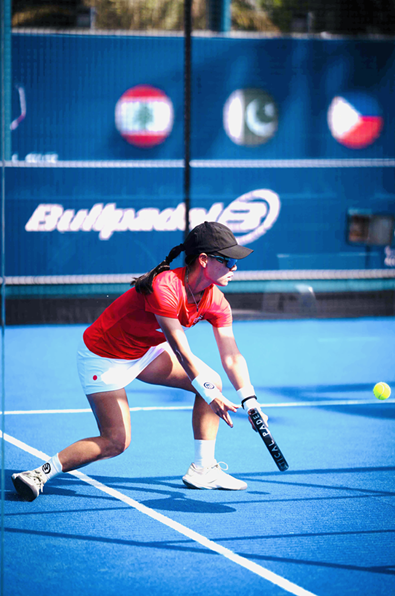
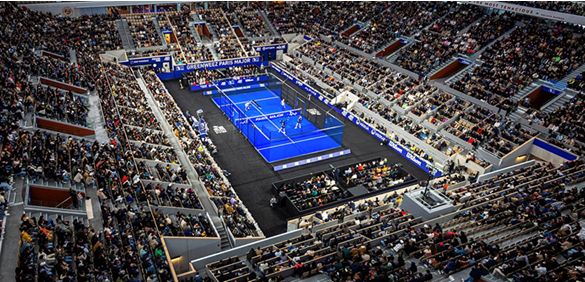
Photos by International Padel Federation
【Overview of Padel】
► A racket sport that combines features of severalracket ball sports.
► Played in doubles on a court surrounded by glass and mesh walls,
with a net in the middle
► Balls that bounce off the walls are still in play
► Uses a slightly softer ball than tennis and a shorter racket
► Originated in Mexico in 1969, and has become more popular than
tennis in parts of Europe
< An Introduction to Padel by the International Padel Federation (FIP)>
Padel is a dynamic and rapidly expanding racket sport played in doubles on an enclosed court, celebrated for its intensity, strategic sophistication, and strong social dimension. The game combines technical precision, agility, and tactical awareness, producing long and spectacular rallies that engage players and spectators alike.
Its accessibility and inclusive nature have contributed to an extraordinary global rise, attracting millions of participants across all age groups.
Its history began in 1969 in Acapulco, Mexico, when Enrique Corcuera built the first court and formalized the initial playing concept, with early rules. In the early 1970s, the sport was introduced to Spain by Prince Alfonso of Hohenlohe and soon thereafter spread to Argentina, Brazil, Uruguay, Chile, France, North America, and beyond.
By 1991, national associations from Argentina, Spain, and Uruguay joined to establish the International Padel Federation (FIP) in Madrid, unifying rules and launching the first World Padel Championships in 1992; since then the sport has grown into a structured global ecosystem with professional tours, junior and senior circuits played in more than 140 countries with tens of millions of participants.
Today, Padel is widely regarded as the fastest-growing sport in the world, with structured international competitions and unified regulations governed by the International Padel Federation (FIP), reflecting its remarkable worldwide development.
Read more about the history on the FIP website here https://www.padelfip.com/history/